
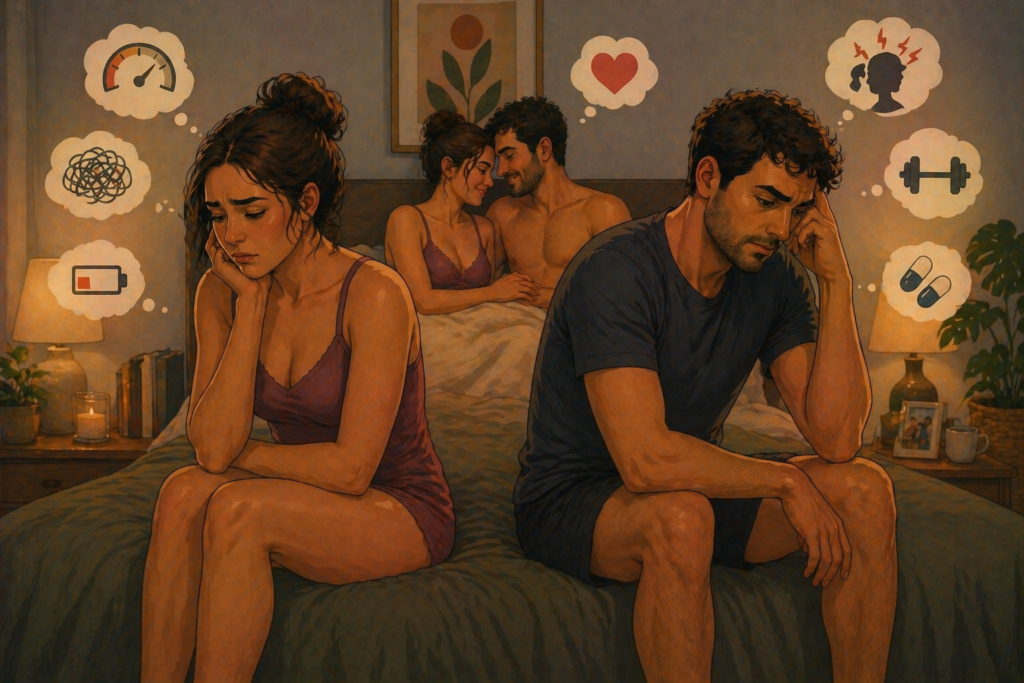
Understanding Arousal Difficulties
Sometimes the challenge isn’t physical ability, but feeling mentally or emotionally ready for intimacy.
Arousal is not just a physical response it is closely connected to thoughts, emotions, stress levels, and the ability to feel present and relaxed. When the mind is distracted, overwhelmed, or not fully engaged, the body may not respond in the way you expect, even when there is an underlying desire for intimacy.
This can show up as difficulty getting “in the mood,” feeling disconnected during intimate moments, or needing more time and the right conditions to become aroused.
Factors such as stress, fatigue, relationship dynamics, or emotional pressure can all play a role, making it harder to transition into a state of readiness.
Understanding how these mental and emotional elements influence arousal is an important step in reducing pressure, improving connection, and creating a more natural and enjoyable experience of intimacy.
Some of the most common signs of Arousal Difficulties include:
- Lack of interest despite opportunity
- Feeling distracted or disengaged
- Difficulty transitioning into intimacy
- Needing more time to feel aroused
- Feeling “not in the mood” frequently
Arousal Difficulties are often influenced by a combination of factors, including:
- Stress or mental load
- Fatigue
- Relationship dynamics
- Hormonal influences
- Lifestyle pressures
Support & Treatment
Understanding what influences desire can make a big difference. Our platform helps you reconnect with your body, your partner, and your sense of intimacy.
Take the Next Step
Start With Guidance
Not sure if this is the right concern or which type of support you need? Answer a few guided questions and we’ll help point you toward the right next step.
Browse Specialists
Already know what you’re looking for? Explore trusted specialists by issue, location, and online or in-person support to find someone who feels right for you.